
Primary education plays an essential role in shaping a child’s academic abilities, confidence, and approach to learning. During these formative years, children develop core skills in English, mathematics, science, reading, writing, and problem solving. These abilities support their progress throughout school and help them become more independent learners. However, children do not always understand new concepts at the same pace. Some may need additional practice, while others benefit from alternative explanations or more individual attention.
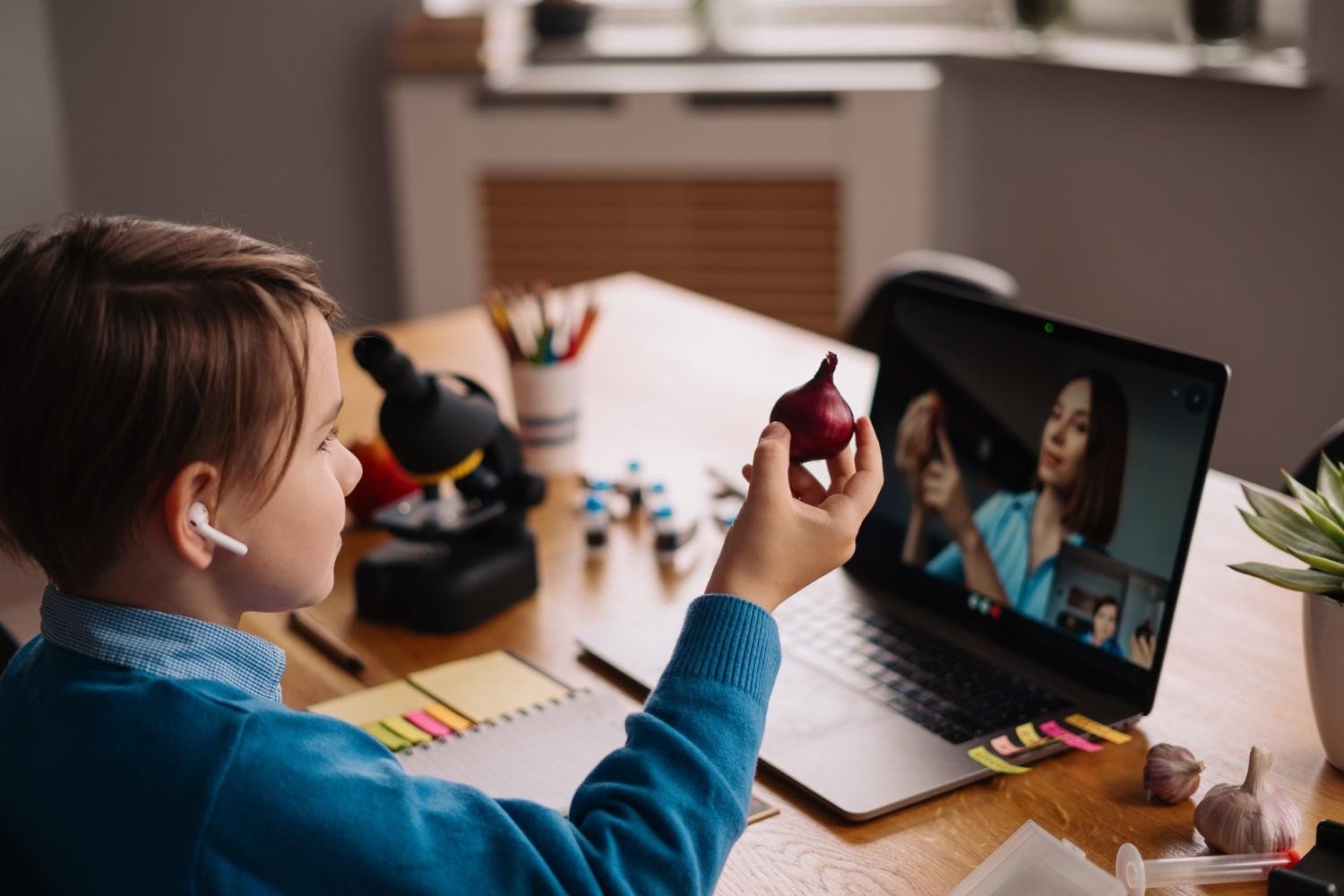
Online tutoring provides an opportunity for children to receive personalised educational support from home. With structured lessons, interactive activities, and regular feedback, children can revisit challenging topics and strengthen their understanding of important concepts. This approach can complement classroom teaching while allowing parents to choose learning arrangements that suit their family’s schedule.
Understanding how online tutoring supports core academic skills can help parents decide whether it is a suitable option for their child’s educational needs.
Understanding the Importance of Core Skills in Primary Education
Core skills form the foundation of a child’s learning experience. Reading helps children understand instructions and explore new information, while writing allows them to communicate ideas clearly. Mathematics develops numerical understanding and logical reasoning, and science encourages curiosity about the world.
When children develop these abilities steadily, they often find it easier to understand more advanced topics as they progress through school. However, difficulties with foundational concepts can affect learning across several subjects.
For example, a child who struggles with reading comprehension may find word problems in mathematics difficult to understand. Similarly, a pupil who has not developed a strong understanding of multiplication may experience challenges when learning division or fractions.
An online primary tutor can help children revisit these foundational concepts, practise them regularly, and build a clearer understanding of the material covered at school.
The aim is not to replace classroom education but to provide additional guidance that responds to the child’s individual learning requirements.
1. Strengthening Reading and Comprehension Skills
Reading is one of the most important abilities children develop during primary school. It supports learning across subjects and helps children build vocabulary, imagination, and communication skills.
Some children can read individual words accurately but struggle to understand the meaning of a complete passage. Others may find unfamiliar vocabulary, longer sentences, or reading aloud challenging.
Online tutoring can provide targeted reading practice that addresses these difficulties.
Developing reading fluency
Reading fluency involves recognising words accurately and reading at a suitable pace. Tutors can use age appropriate passages, short stories, and guided reading exercises to help children practise.
Regular sessions may help children become more comfortable reading aloud and recognising common words.
Improving comprehension
Comprehension activities encourage children to identify the main idea, understand important details, and explain what they have read. A tutor might ask questions about a story, encourage a child to predict what happens next, or help them describe a character’s actions.
These activities teach children to think about the meaning of a text rather than simply pronounce the words.
Expanding vocabulary
Children encounter unfamiliar words as they read. Tutors can explain new vocabulary through examples, pictures, and simple definitions. They can also encourage children to use new words in their own sentences.
Stronger reading skills can help pupils follow written instructions, understand school resources, and approach unfamiliar topics with greater confidence.
2. Improving Writing, Grammar, and Sentence Construction
Writing allows children to express ideas, describe experiences, answer questions, and demonstrate their understanding of different subjects. Primary school pupils gradually learn how to organise sentences, use punctuation, spell words correctly, and develop paragraphs.
Some children may understand a topic but find it difficult to communicate their ideas in writing. Others may need additional support with spelling, grammar, or sentence structure.
Online tutoring can break writing tasks into manageable steps.
For instance, a tutor may begin by asking a child to describe a favourite activity. The child can then learn to organise the description into complete sentences, add relevant details, and check punctuation.
Writing practice may focus on:
- Constructing clear sentences using correct grammar.
- Improving spelling and punctuation.
- Expanding vocabulary through reading and discussion.
- Organising ideas into paragraphs.
- Writing short stories, descriptions, and informative passages.
- Reviewing written work and correcting mistakes.
Digital learning tools can make writing lessons interactive. Children may use shared documents, virtual whiteboards, or guided exercises to practise editing their work.
The tutor can provide immediate feedback and explain why a particular change improves clarity. Over time, this can help children recognise common mistakes and become more independent when completing written assignments.
3. Building Strong Mathematical Foundations
Mathematics introduces children to numbers, patterns, calculations, shapes, measurements, and problem solving. These concepts become progressively more complex throughout primary school, making a clear understanding of the basics especially important.
Children may need different approaches to understand the same mathematical idea. Some respond well to visual examples, while others learn more effectively through practical activities or repeated guided practice.
Online tutoring can adapt lessons to these needs.
Understanding number concepts
Tutors can use number lines, visual representations, and interactive exercises to explain place value, number comparisons, and basic calculations. These methods help children understand how numbers relate to one another.
Practising arithmetic
Addition, subtraction, multiplication, and division require regular practice. A tutor can identify specific difficulties and provide questions that gradually increase in complexity.
For example, a child who struggles with multiplication tables may benefit from grouping objects, recognising number patterns, and solving short problems before moving on to timed exercises.
Developing problem solving
Mathematical problem solving requires children to understand a question, identify the relevant information, select an appropriate method, and check their answer.
Tutors can guide children through these steps rather than simply showing them the correct calculation. This encourages reasoning and helps pupils understand why a method works.
Consistent practice can improve accuracy and help children approach unfamiliar questions with greater confidence.
4. Making Science Easier to Understand
Primary science encourages children to investigate the natural world, observe changes, ask questions, and explain how things work. Topics may include plants, animals, human health, materials, forces, electricity, and the environment.
Some scientific concepts can seem abstract when children encounter them for the first time. Online tutoring can make these topics easier to understand by connecting explanations to familiar experiences.
For example, a lesson about plant growth might include photographs of plants at different stages, a discussion about sunlight and water, and an activity in which the child records observations of a growing seed.
Tutors can use diagrams, short demonstrations, videos, and interactive questions to explain scientific ideas.
Science lessons may help children learn to:
- Recognise important scientific terms.
- Describe observations accurately.
- Identify similarities and differences.
- Ask questions and make simple predictions.
- Understand basic cause and effect relationships.
- Explain scientific ideas using their own words.
Practical activities remain valuable, even when lessons take place online. A tutor can suggest safe, simple observations using everyday materials under appropriate adult supervision.
This approach encourages curiosity and helps children connect school science with the world around them.
5. Supporting Different Learning Styles and Paces
Children develop at different rates, and their educational needs can change as they encounter new subjects. Some grasp a concept quickly but need help remembering it, while others require several examples before feeling confident.
In a traditional classroom, lessons generally follow a planned schedule designed for the whole group. Additional tutoring provides more flexibility to revisit concepts or spend extra time on difficult areas.
An online tutor can adapt explanations, activities, and practice questions according to the child’s progress.
For example, a visual learner may benefit from diagrams and illustrations, while a child who learns through discussion may need opportunities to explain ideas aloud. A pupil who has mastered a topic can move towards more challenging questions instead of repeating familiar exercises unnecessarily.
Personalised support can help children develop a more comfortable relationship with learning. It also allows sessions to focus on specific needs rather than covering every subject in the same amount of time.
Parents should remember that learning preferences are not fixed categories. Children often benefit from a combination of explanations, practice, discussion, and practical activities.
6. Developing Confidence and a Positive Attitude Towards Learning
Confidence affects how children approach academic challenges. A child who worries about making mistakes may avoid difficult questions, hesitate to participate, or become frustrated when a task takes longer than expected.
A supportive tutoring environment can help children view mistakes as opportunities to improve.
During individual sessions, pupils can ask questions, request further explanations, and practise without the pressure they may feel in a larger classroom. Tutors can acknowledge effort, explain errors constructively, and set realistic goals.
Confidence building activities might include:
- Solving a challenging question with guided support.
- Explaining a recently learned concept in the child’s own words.
- Tracking progress towards a small learning goal.
- Reviewing previous mistakes and understanding how to correct them.
- Celebrating improvements in effort, accuracy, or independence.
These experiences can help children recognise their progress and become more willing to attempt unfamiliar tasks.
The objective is not to remove every challenge but to help children develop the confidence and resilience needed to work through difficulties.
7. Encouraging Independent Learning and Better Study Habits
Academic progress depends partly on how children approach learning outside tutoring sessions. Developing effective study habits during primary school can make homework and revision more manageable.
Online tutoring can introduce simple routines that children can gradually use independently.
Tutors may teach pupils how to read instructions carefully, divide assignments into smaller tasks, review lesson notes, and check completed work.
Helpful habits include:
- Setting aside a regular time for homework.
- Keeping learning materials organised.
- Reviewing important concepts after lessons.
- Practising difficult topics in short, manageable sessions.
- Checking answers before submitting work.
- Asking for help when instructions are unclear.
Tutors can also encourage children to explain their thinking instead of relying entirely on memorised answers. This helps them recognise what they understand and identify areas that need further practice.
As children become more confident, tutoring should encourage greater independence rather than creating a need for constant assistance.
8. Making Learning More Convenient Through Online Sessions
Online tutoring allows children to access educational support without travelling to another location. For many families, this makes it easier to arrange lessons around school, extracurricular activities, and family commitments.
Children can learn from a familiar environment, provided it is reasonably quiet and suitable for focused study.
Online lessons may use digital worksheets, shared screens, virtual whiteboards, educational games, and interactive quizzes. These resources can make sessions engaging when they are selected according to the child’s age and learning goals.
However, online tutoring is not automatically suitable for every child. Younger pupils may need help using the technology, and some may find it difficult to concentrate during screen based activities.
Parents can support successful sessions by providing a reliable internet connection, suitable equipment, and a distraction free workspace.
Regular breaks and a balanced schedule are also important. Tutoring should fit comfortably alongside play, physical activity, reading, and rest.
9. How Parents Can Support Learning Between Sessions
Parents can reinforce the skills children practise during tutoring by creating simple learning opportunities at home. These activities do not need to involve lengthy study periods or additional pressure.
For example, reading together for a short time each day can strengthen vocabulary and comprehension. Cooking can introduce measurement and fractions, while observing weather changes or plants can encourage scientific thinking.
Parents can also ask children to explain what they learned during a session. Describing a concept in their own words gives children an opportunity to recall information and identify anything they still find confusing.
Useful ways to support progress include:
- Encouraging regular reading suited to the child’s ability.
- Practising mathematical concepts through everyday activities.
- Providing a calm place for homework.
- Asking open ended questions about school topics.
- Recognising effort and gradual improvement.
- Sharing relevant feedback with the tutor.
Parents should avoid turning every activity into a formal lesson. Children need time to explore their interests naturally, and learning should remain a positive part of everyday life.
10. Choosing the Right Online Primary Tutor
Selecting a suitable tutor is an important step towards making online learning effective. Parents should consider the child’s current abilities, areas of difficulty, preferred teaching approach, and educational goals.
A tutor who understands primary education should be able to explain concepts clearly and adapt lessons to the child’s developmental stage.
Before arranging sessions, parents may wish to consider the following factors.
Experience and curriculum knowledge
Ask about experience teaching primary school pupils and familiarity with the curriculum relevant to the child. If the family is in England, for example, parents may want support aligned with the English national curriculum.
Lesson structure
Find out how sessions are planned, how activities are selected, and whether lessons include opportunities for practice and discussion.
Interaction and engagement
The tutor should encourage participation rather than relying entirely on lengthy explanations. Interactive questions and regular feedback can help maintain attention.
Progress tracking
Ask how learning goals will be established and how improvements or continuing difficulties will be communicated.
Practical arrangements
Check lesson duration, scheduling, fees, cancellation policies, technology requirements, and appropriate safeguarding arrangements.
A short introductory session can help determine whether the tutor’s approach is suitable for the child.
Frequently Asked Questions
1. What core skills can children develop through online tutoring?
Children can strengthen reading, comprehension, writing, grammar, mathematics, science knowledge, and problem solving. Depending on their needs, tutoring can also support communication, independent learning, and study habits.
2. How often should primary school children attend online tutoring?
The ideal frequency depends on the child’s learning goals, age, attention span, and school workload. A weekly session may be appropriate for general reinforcement, while more frequent sessions may be useful for specific difficulties. The schedule should be adjusted according to progress.
3. Is online tutoring effective for younger children?
Online tutoring can be effective for younger pupils when lessons are short enough to maintain attention, interactive, and appropriate for their developmental stage. Younger children may need parental assistance with technology and occasional breaks during sessions.
4. Can online tutoring help children who struggle with mathematics?
Yes. Tutors can identify gaps in foundational knowledge and provide additional explanations and practice. Visual examples, guided calculations, and carefully structured questions can help children understand mathematical concepts more clearly.
5. How can parents measure progress in online tutoring?
Parents can look for improvements in homework accuracy, reading comprehension, problem solving, confidence, and independence. Regular tutor feedback and comparisons of work completed over time can help identify progress and remaining challenges.
6. What equipment is needed for online primary tutoring?
Most sessions require a suitable computer or tablet, a reliable internet connection, audio equipment, and access to the tutor’s chosen learning platform. A notebook, pencils, textbooks, and other basic learning materials may also be useful.
7. Should online tutoring replace school lessons?
No. Online tutoring is generally intended to complement classroom education by providing additional practice and personalised support. School lessons continue to provide structured teaching, classroom interaction, and broader educational experiences.
Helping Children Build Skills for Long Term Success
Developing strong core skills during primary school can support children’s academic progress and confidence for years to come. Reading, writing, mathematics, and science provide essential knowledge, while independent learning and problem solving help children apply that knowledge in different situations.
Online tutoring offers a flexible way to reinforce these abilities through personalised explanations, guided practice, and regular feedback. Its effectiveness depends on the quality of instruction, the child’s participation, suitable learning activities, and realistic expectations.
Parents can make the most of tutoring by choosing an approach that meets their child’s needs and maintaining open communication with the tutor. When online lessons are balanced with classroom learning, everyday experiences, and sufficient time for play and rest, children can develop important skills in a supportive environment.